![Digital Inclusion Begins With People: Maureen Hilyard]()
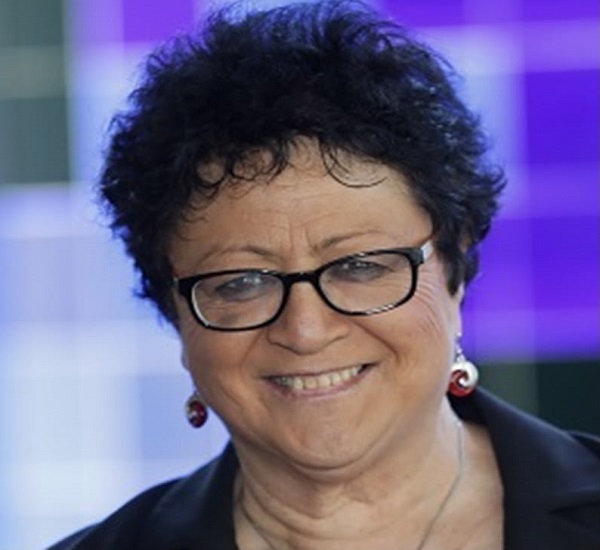
Conversation with Maureen Hilyard, Internet Society Board Member Maureen Hilyard is a globally recognized development and Internet governance expert with decades of experience working across Small Island Developing States (SIDS). Her work spans digital education, Internet accessibility in remote islands, and leadership roles in global Internet governance institutions including the Internet Society, ICANN and APRALO.
In this interview conducted by senior journalist Mohammad Kawsar Uddin, she shares her perspectives on digital inclusion, governance, youth engagement and the evolving challenges of building a truly inclusive Internet-drawing lessons from the Cook Islands and broader Pacific region that resonate strongly with developing countries like Bangladesh.
Question: You helped bring Internet access to remote islands in the Cook Islands. What lessons from that experience could help Bangladesh improve connectivity in its remote and underserved communities?
Answer: The Cook Islands and Bangladesh are very different in scale and resources and Bangladesh has achieved remarkable digital progress. I would not presume to tell Bangladesh how to build its digital future. However, one key lesson is that digital inclusion is fundamentally a human issue, not just a technological one. We must first understand what people care about- education, health, family connection and opportunity and then provide connectivity that enables those goals.
In our outer islands, students once waited months for feedback from teachers. When Internet connectivity arrived, communication shifted to days or hours, transforming education and engagement. I have seen firsthand how even a simple message can have a profound emotional impact. That is why connectivity matters.
Question: Bangladesh has expanded Internet access significantly. What should be the next priorities?
Answer: People do not wake up wanting broadband. They want education, healthcare, communication and opportunity. Internet access becomes meaningful only when it enables these goals. So the priority is ensuring that connectivity translates into real-life benefits: better services, economic opportunity, and stronger human connection. That is the foundation of meaningful digital inclusion.
Question: What is the role of local Internet Society Chapters, including Bangladesh’s chapter?
Answer: Local chapters are vital because they understand local needs best. The Pacific Islands Chapter (PICISOC), for example, brings together members from very diverse island contexts, each with different challenges and cultures. Even within small regions, needs vary widely. But shared platforms allow voices to be heard locally, regionally and globally.
No community is too small to contribute to Internet governance conversations. Building relationships between chapters also strengthens knowledge-sharing and collective impact.
Question: Why should young professionals and policymakers from Bangladesh engage in global Internet governance?
Answer: Participation begins with understanding governance at national and regional levels. Youth platforms such as the Bangladesh Youth IGF are excellent starting points. There are also regional and global opportunities through APRIGF, APNIC, ICANN fellowship programs, and Internet Society initiatives.
These platforms help young people build skills, networks, and confidence to engage in multi-stakeholder Internet governance.
Question: What makes a national digital transformation strategy successful?
Answer: This depends heavily on national priorities and requires strong government support. Without policy endorsement and alignment with national goals, digital transformation strategies cannot succeed.
Question: What common digital challenges exist between island nations and Bangladesh?
Answer: The key challenge is inclusion, ensuring that marginalized voices are heard. Whether in remote Pacific islands or rural Bangladesh, the principle is the same: meaningful participation matters. Small or underrepresented communities often generate powerful ideas when given the opportunity.
The challenge is to ensure their voices shape broader Internet discussions.
Question: How can Bangladesh better engage youth in digital leadership?
Answer: The most effective youth programs give responsibility, not just participation. Young people are not only the future, they are the present.
Programs like NetMission, APIGA, APRIGF fellowships and ICANN initiatives provide mentorship and leadership pathways.
These experiences often create lifelong professional networks and opportunities.
Question: What should countries like Bangladesh prepare for in the next five years?
Answer: Rather than advising broadly, I can share an example from our region. In the Cook Islands, we are developing an AI-based “knowledge keeper” to preserve indigenous language and culture.
This reflects a broader issue: ensuring that AI and digital innovation also serve small languages and communities, not only large markets. Cultural preservation in the digital age will be an important global challenge.
Question: How can Bangladesh ensure its digital economy remains open, secure, and inclusive?
Answer: Bangladesh has already made impressive progress in digital development. From my perspective in a very different context, I can only say that inclusive growth requires continuous attention to openness, security, and equitable access.
Sometimes, viewing a challenge from a different scale helps reveal universal lessons, but Bangladesh also has much that others can learn from.
Post Views: 1221



Comments (0)
Leave a comment
আপনার ই-মেইল এ্যাড্রেস প্রকাশিত হবে না। * চিহ্নিত বিষয়গুলো আবশ্যক।